The Most Popular Types of Welding Rods
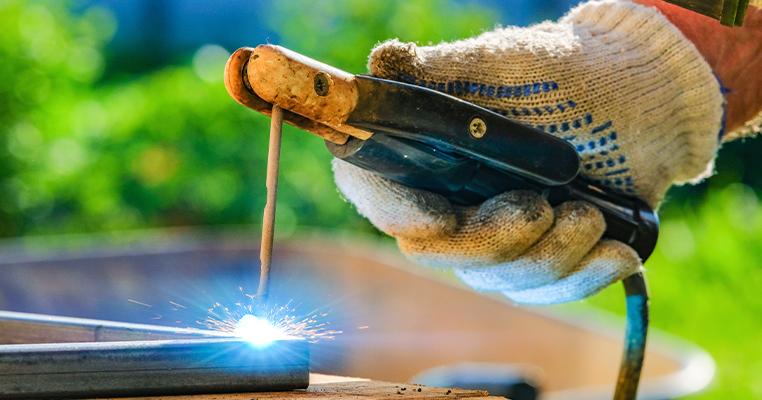
They are:
E6010. Among the most popular electrodes, these require DC and a narrow arc. They are common in steel welding applications that require deep penetration, such as shipbuilding, steel storage tanks, and other large-scale applications.
E6011. These are similar to E6010 but can be used with AC as well. They are one of the most common go-to electrodes for thick welding materials, with a bit more leeway and ease of use than E6010. Their primary drawback is that their weld beads tend to be flatter and leave waves, so they may not be as aesthetically pleasing as other welds.
E6012. These welding rods support both AC and DC current and are ideal for welding with minimal spatter and slag. They create a stable arc and are great at shallow penetration. As such, they are best for repair, cosmetic, non-critical welds, and welds of certain materials like oxidized carbon steel. They also produce thick welds, which may need cleaning after.
E6013. Another of the most popular electrodes, this composition is easy to use and creates very little spatter. It’s commonly used in mid-penetration welding and for mid-thickness materials. It’s also good for short runs and multiple welds, where consistency between welds is necessary during a repositioning.
E7018. Perhaps the most popular electrode, this is one of the best multipurpose rods available and a staple of every welder’s kit. It’s mostly used for welding low and medium-carbon steel and can create a significantly stronger weld than any of the E60XX rods. The flux coating on the rod is also essential for preventing inclusions in the weld itself. E7018 is found in many kinds of construction and other joinery.
E7024. This rod uses a high iron content in its flux, which makes it very quick in heating and deposition. This characteristic makes it ideal for fast, high-speed welds but risks issues if your process is too slow. They’re also ideal for smooth, flat-surfaced, or finely-waved finished welds.
Further Reading
All of this only scratches the surface of electrodes and welding rods. There are many, many other rods out there, many of which have specific purposes. Design specifications, industry regulations, or directives often identify distinct rods necessary for individual projects. Most of this doesn’t need to be memorized, though knowing the basics of how the rods are categorized can give you immediate insight into what you’re working with.
Remember, too, that this is primarily about welding rod electrodes. Filler rods can have other numbers to identify them. For example, aluminum filler rods have numerical codes to specify the aluminum alloy used in the rod so that you can match it as closely as possible to the joined materials.
The rabbit hole is deep, and there’s always more to learn, even among experienced welding veterans. Feel free to contact us with questions about which rods are ideal for your projects or welding equipment requirements. We’re happy to help.


Comments
Post a Comment